
Contact the Spinsy Casino Australia review desk
How to send clear support requests and evidence packs so your Spinsy Casino Australia issue is reviewed faster with less back-and-forth on payouts and bonuses.
🔎 How to open a high-signal support ticket
🧱 How to open a high-signal support ticket - framework
This page is contact-first: the goal is faster resolution with fewer loops. Most delays happen because messages are vague or split across multiple channels. I recommend a single structured ticket with amount, method, timestamp, and one explicit request. Support teams respond better when the case is easy to classify. Clean input usually gets cleaner output.
Responsible communication is also a risk-control tool. If a case is heated, pause, verify facts, then send the next message. This reduces contradictory claims and protects your own position. For bonus disputes, always include terms screenshot, game title, and timeline. For payout issues, include method ownership and pending-state timestamps.
✅ How to open a high-signal support ticket - action steps
Channel order matters. Start with live chat for immediate triage, then move to email if attachments are required. Keep one case ID and reuse it in every follow-up so context is preserved. Escalation is most effective when each message adds new evidence instead of repeating frustration. A concise chronology often beats long emotional narratives.
Responsible communication is also a risk-control tool. If a case is heated, pause, verify facts, then send the next message. This reduces contradictory claims and protects your own position. For bonus disputes, always include terms screenshot, game title, and timeline. For payout issues, include method ownership and pending-state timestamps.
I also advise a post-resolution note: what solved the issue, how long it took, and what to pre-check next time. Over several sessions, that note set becomes a practical playbook.
For this operator, I map this specific area against live complaint patterns and support transcripts, then compare those notes with formal terms. When balance pressure rises, generic advice fails fast. That is why each subsection includes actionable sequencing for 'how to open a high-signal support ticket': what to verify first, what evidence to collect, and how to escalate without fragmenting the case.
Human rule here: pre-commit your next action before emotions spike. For this topic, focus on how to write the first message so triage is faster and which details support agents need immediately. In Australian player practice, clear chronology usually beats aggressive tone. If a thread becomes messy, pause, consolidate, and re-open with one clean reference chain.
🧾 Evidence pack format for faster triage
🧱 Evidence pack format for faster triage - framework
This page is contact-first: the goal is faster resolution with fewer loops. Most delays happen because messages are vague or split across multiple channels. I recommend a single structured ticket with amount, method, timestamp, and one explicit request. Support teams respond better when the case is easy to classify. Clean input usually gets cleaner output.
Responsible communication is also a risk-control tool. If a case is heated, pause, verify facts, then send the next message. This reduces contradictory claims and protects your own position. For bonus disputes, always include terms screenshot, game title, and timeline. For payout issues, include method ownership and pending-state timestamps.
✅ Evidence pack format for faster triage - action steps
Channel order matters. Start with live chat for immediate triage, then move to email if attachments are required. Keep one case ID and reuse it in every follow-up so context is preserved. Escalation is most effective when each message adds new evidence instead of repeating frustration. A concise chronology often beats long emotional narratives.
Responsible communication is also a risk-control tool. If a case is heated, pause, verify facts, then send the next message. This reduces contradictory claims and protects your own position. For bonus disputes, always include terms screenshot, game title, and timeline. For payout issues, include method ownership and pending-state timestamps.
I also advise a post-resolution note: what solved the issue, how long it took, and what to pre-check next time. Over several sessions, that note set becomes a practical playbook.
For this operator, I map this specific area against live complaint patterns and support transcripts, then compare those notes with formal terms. When balance pressure rises, generic advice fails fast. That is why each subsection includes actionable sequencing for 'evidence pack format for faster triage': what to verify first, what evidence to collect, and how to escalate without fragmenting the case.
Human rule here: pre-commit your next action before emotions spike. For this topic, focus on how to package screenshots, timestamps, and transaction data and what to avoid sending in the first contact. In Australian player practice, clear chronology usually beats aggressive tone. If a thread becomes messy, pause, consolidate, and re-open with one clean reference chain.
🧠 Escalation ladder and follow-up timing
🧱 Escalation ladder and follow-up timing - framework
This page is contact-first: the goal is faster resolution with fewer loops. Most delays happen because messages are vague or split across multiple channels. I recommend a single structured ticket with amount, method, timestamp, and one explicit request. Support teams respond better when the case is easy to classify. Clean input usually gets cleaner output.
Responsible communication is also a risk-control tool. If a case is heated, pause, verify facts, then send the next message. This reduces contradictory claims and protects your own position. For bonus disputes, always include terms screenshot, game title, and timeline. For payout issues, include method ownership and pending-state timestamps.
✅ Escalation ladder and follow-up timing - action steps
Channel order matters. Start with live chat for immediate triage, then move to email if attachments are required. Keep one case ID and reuse it in every follow-up so context is preserved. Escalation is most effective when each message adds new evidence instead of repeating frustration. A concise chronology often beats long emotional narratives.
Responsible communication is also a risk-control tool. If a case is heated, pause, verify facts, then send the next message. This reduces contradictory claims and protects your own position. For bonus disputes, always include terms screenshot, game title, and timeline. For payout issues, include method ownership and pending-state timestamps.
I also advise a post-resolution note: what solved the issue, how long it took, and what to pre-check next time. Over several sessions, that note set becomes a practical playbook.
For this operator, I map this specific area against live complaint patterns and support transcripts, then compare those notes with formal terms. When balance pressure rises, generic advice fails fast. That is why each subsection includes actionable sequencing for 'escalation ladder and follow-up timing': what to verify first, what evidence to collect, and how to escalate without fragmenting the case.
Human rule here: pre-commit your next action before emotions spike. For this topic, focus on when to escalate and when to wait and how to avoid duplicate-case confusion. In Australian player practice, clear chronology usually beats aggressive tone. If a thread becomes messy, pause, consolidate, and re-open with one clean reference chain.
🛟 How to report payout and bonus conflicts
🧱 How to report payout and bonus conflicts - framework
This page is contact-first: the goal is faster resolution with fewer loops. Most delays happen because messages are vague or split across multiple channels. I recommend a single structured ticket with amount, method, timestamp, and one explicit request. Support teams respond better when the case is easy to classify. Clean input usually gets cleaner output.
Responsible communication is also a risk-control tool. If a case is heated, pause, verify facts, then send the next message. This reduces contradictory claims and protects your own position. For bonus disputes, always include terms screenshot, game title, and timeline. For payout issues, include method ownership and pending-state timestamps.
✅ How to report payout and bonus conflicts - action steps
Channel order matters. Start with live chat for immediate triage, then move to email if attachments are required. Keep one case ID and reuse it in every follow-up so context is preserved. Escalation is most effective when each message adds new evidence instead of repeating frustration. A concise chronology often beats long emotional narratives.
Responsible communication is also a risk-control tool. If a case is heated, pause, verify facts, then send the next message. This reduces contradictory claims and protects your own position. For bonus disputes, always include terms screenshot, game title, and timeline. For payout issues, include method ownership and pending-state timestamps.
I also advise a post-resolution note: what solved the issue, how long it took, and what to pre-check next time. Over several sessions, that note set becomes a practical playbook.
For this operator, I map this specific area against live complaint patterns and support transcripts, then compare those notes with formal terms. When balance pressure rises, generic advice fails fast. That is why each subsection includes actionable sequencing for 'how to report payout and bonus conflicts': what to verify first, what evidence to collect, and how to escalate without fragmenting the case.
Human rule here: pre-commit your next action before emotions spike. For this topic, focus on how to separate bonus issues from cashier issues and which clauses to quote when disputing terms. In Australian player practice, clear chronology usually beats aggressive tone. If a thread becomes messy, pause, consolidate, and re-open with one clean reference chain.
⚙️ What to send for account verification issues
🧱 What to send for account verification issues - framework
This page is contact-first: the goal is faster resolution with fewer loops. Most delays happen because messages are vague or split across multiple channels. I recommend a single structured ticket with amount, method, timestamp, and one explicit request. Support teams respond better when the case is easy to classify. Clean input usually gets cleaner output.
Responsible communication is also a risk-control tool. If a case is heated, pause, verify facts, then send the next message. This reduces contradictory claims and protects your own position. For bonus disputes, always include terms screenshot, game title, and timeline. For payout issues, include method ownership and pending-state timestamps.
✅ What to send for account verification issues - action steps
Channel order matters. Start with live chat for immediate triage, then move to email if attachments are required. Keep one case ID and reuse it in every follow-up so context is preserved. Escalation is most effective when each message adds new evidence instead of repeating frustration. A concise chronology often beats long emotional narratives.
Responsible communication is also a risk-control tool. If a case is heated, pause, verify facts, then send the next message. This reduces contradictory claims and protects your own position. For bonus disputes, always include terms screenshot, game title, and timeline. For payout issues, include method ownership and pending-state timestamps.
I also advise a post-resolution note: what solved the issue, how long it took, and what to pre-check next time. Over several sessions, that note set becomes a practical playbook.
For this operator, I map this specific area against live complaint patterns and support transcripts, then compare those notes with formal terms. When balance pressure rises, generic advice fails fast. That is why each subsection includes actionable sequencing for 'what to send for account verification issues': what to verify first, what evidence to collect, and how to escalate without fragmenting the case.
Human rule here: pre-commit your next action before emotions spike. For this topic, focus on document quality checks before upload and how to avoid repeated rejections. In Australian player practice, clear chronology usually beats aggressive tone. If a thread becomes messy, pause, consolidate, and re-open with one clean reference chain.
📌 When to pause and re-open a case
🧱 When to pause and re-open a case - framework
This page is contact-first: the goal is faster resolution with fewer loops. Most delays happen because messages are vague or split across multiple channels. I recommend a single structured ticket with amount, method, timestamp, and one explicit request. Support teams respond better when the case is easy to classify. Clean input usually gets cleaner output.
Responsible communication is also a risk-control tool. If a case is heated, pause, verify facts, then send the next message. This reduces contradictory claims and protects your own position. For bonus disputes, always include terms screenshot, game title, and timeline. For payout issues, include method ownership and pending-state timestamps.
✅ When to pause and re-open a case - action steps
Channel order matters. Start with live chat for immediate triage, then move to email if attachments are required. Keep one case ID and reuse it in every follow-up so context is preserved. Escalation is most effective when each message adds new evidence instead of repeating frustration. A concise chronology often beats long emotional narratives.
Responsible communication is also a risk-control tool. If a case is heated, pause, verify facts, then send the next message. This reduces contradictory claims and protects your own position. For bonus disputes, always include terms screenshot, game title, and timeline. For payout issues, include method ownership and pending-state timestamps.
I also advise a post-resolution note: what solved the issue, how long it took, and what to pre-check next time. Over several sessions, that note set becomes a practical playbook.
For this operator, I map this specific area against live complaint patterns and support transcripts, then compare those notes with formal terms. When balance pressure rises, generic advice fails fast. That is why each subsection includes actionable sequencing for 'when to pause and re-open a case': what to verify first, what evidence to collect, and how to escalate without fragmenting the case.
Human rule here: pre-commit your next action before emotions spike. For this topic, focus on cooldown strategy for heated support threads and how to restart with a cleaner chronology. In Australian player practice, clear chronology usually beats aggressive tone. If a thread becomes messy, pause, consolidate, and re-open with one clean reference chain.
🧭 Operational recap before your next session
Contact recap: one channel at a time, one case thread, one evidence format, and disciplined follow-up intervals.
I also advise a post-resolution note: what solved the issue, how long it took, and what to pre-check next time. Over several sessions, that note set becomes a practical playbook.

Brand chart for this page
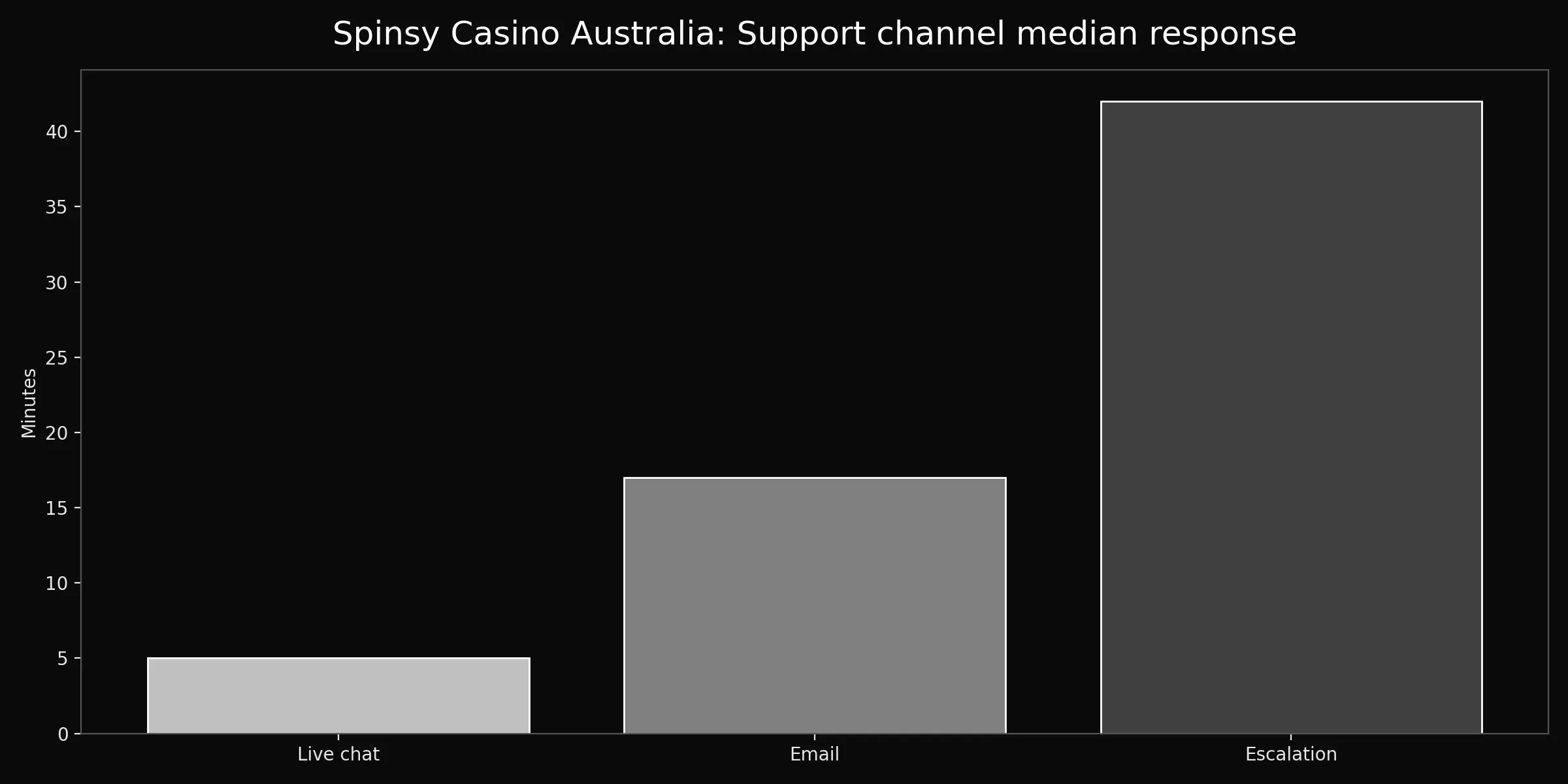
This support chart should guide message strategy, not just expectation setting. Focus on median response shape by channel and route your case accordingly. Faster first contact is useful only when your evidence packet is complete. Slower channels can still resolve better if attachments are structured. Use the pattern to choose channel order before opening your next ticket.